WV SORO, along with three environmental organizations, has filed suit in the US District Court to challenge the EPA’s decision to grant primacy of permitting and oversight of injection wells. Injection wells that will permanently inject and store carbon dioxide (CO2) captured from power plants and some industrial processes, rather than release the CO2 into the atmosphere. This process, called “carbon capture and underground sequestration”, or CCS for short, is an attempt to limit the effect that the release of CO2 is having on climate change.
In addition to WV SORO, the Sierra Club, the West Virginia Rivers Coalition, and the West Virginia Highlands Conservancy are also involved in this petition before the Fourth Circuit Court of Appeals. Lawyers from Appalachian Mountain Advocates are representing us. WV SORO and co-petitioners are suing Lee Zeldin, Administrator of the EPA and Catherine Libertz, Acting Regional Administrator for EPA Region III.
Before bringing suit, Appalachian Mountain Advocates filed comments on behalf of the co-petitioners and six other organizations opposing EPA’s proposal to turn over regulation of carbon dioxide injection to the state. Those comments informed the EPA that the state’s proposed program did not meet federal minimum standards and included key provisions that are beyond EPA’s statutory and constitutional authority to approve (some of which EPA agreed with).
The Fourth Circuit has now allowed the State of West Virginia and its Department of Environmental Protection (DEP), which oversees carbon capture and sequestration wells, to be parties to the court action.
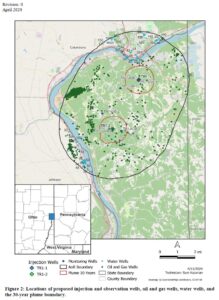
In its motion to intervene, the state said it has “a substantial interest in the regulation and management of its own natural resources” and that it should be “free to develop a variety of solutions to [environmental] problems and not be forced into a common, uniform mold.” However, one of the first storage well permits is for a project named “Tri-State CCS Redbud.” And the area of review for that permit includes the town of East Liverpool, Ohio, with a population of 9,958.
A History of Failed Environmental Oversight
WV SORO is particularly concerned because the Legislature and DEP have done a miserable job overseeing other similar environmental processes.
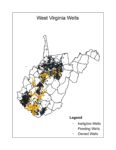
The state oversees the drilling and plugging of oil and gas wells. They allowed the oil and gas industry to leave more than 12,000 wells unplugged, including 4,500 abandoned so long ago that the operators no longer exist, stranding orphaned wells on private land. Pollution from these unplugged wells threatens public health, and even their mere existence sticking out of the ground decreases property values and use. We oppose trusting the oversight of these dangerous wells to the state.
We are particularly concerned that the state income tax cuts enacted by politicians to pander to citizens will mean oversight funding must come from an industry fee. That fee must be set and imposed by the Legislature in a rule it approves. The Legislature will decide whether to impose the industry fee during the 2026 session, and the current body rarely advances any rule without industry permission. So we are certain the state’s oversight will be underfunded.
The best example is oil and gas well oversight. The Legislature has provided funding for only 23 oil and gas inspectors. The state’s (incomplete) database of oil and gas wells includes 75,000 wells and 20,000 associated tanks. West Virginia has the lowest inspector-to-wells ratio compared to all surrounding states. Plus, those same few inspectors have to review over 200 drilling permits each year and oversee the easy-to-cheat-on plugging of orphaned wells using some available federal funding.
We should learn from history. If EPA’s decision to grant West Virginia primacy is allowed to stand, the critical oversight of these wells will be underfunded.
If one of these huge CCS storage fields should leak, as existing gas storage fields sometimes do, the CO2 can displace the fresh air that contains the oxygen people need to breathe, leading to asphyxiation or suffocation. CO2 leaks can cause a car engine to stall, preventing people from fleeing a CO2 disaster. This happened when a CO2 pipeline to a secondary oil recovery project in Sartoria, Mississippi, ruptured in several locations.
“Adequate oversight of carbon injection is critical to protect the health of West Virginians,” stated Autumn Crowe, Deputy Director of the West Virginia Rivers Coalition. “Our communities are already overburdened by pollution, and the addition of another source of a potentially deadly gas puts our communities at even greater risk. We must ensure that we are prioritizing the health and safety of residents in close proximity to the proposed injection sites.”
Legal Briefing Comes Next
Appalachian Mountain Advocates will present their legal arguments to the Court on behalf of WV SORO and the environmental organizations after the Court sets a briefing order.
We expect the first challenge to be that WV SORO does not have members directly affected. But we have submitted statements from at least four WV SORO members with land near Kanawha State Forest, which has leased its pore space, and near the Marshall/Ohio County line, where a project has been proposed.
In the meantime, West Virginia can proceed with administering the carbon dioxide injection program until the Court makes a ruling in the case.